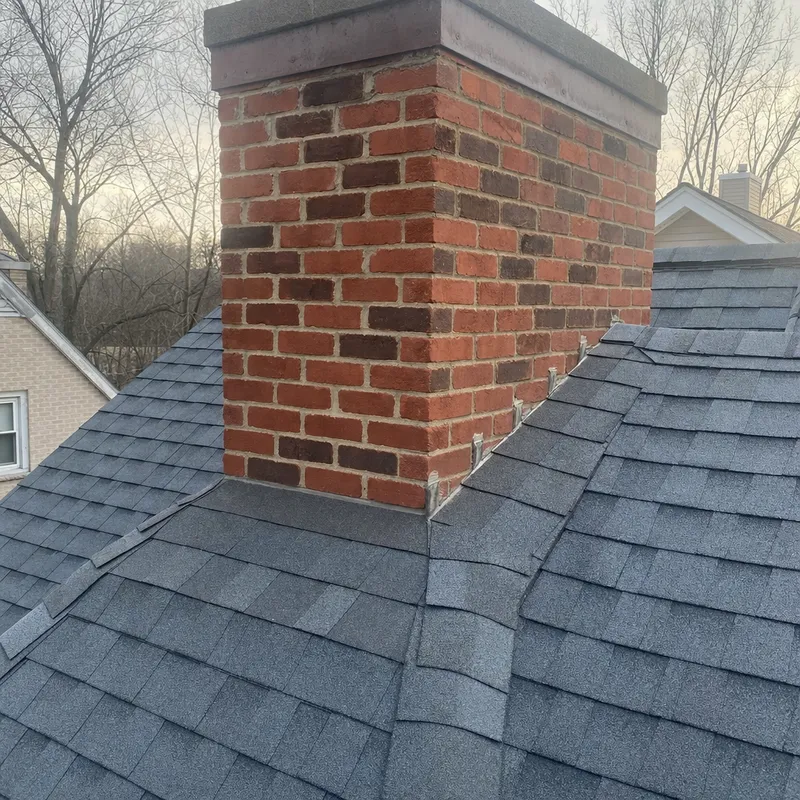
A chimney cricket is a small peaked saddle built on the high side of your chimney that splits rainwater and snowmelt and sends it around the masonry instead of letting it pool behind it. Wide chimneys on sloped roofs collect a surprising amount of runoff, and without a cricket that water sits against the brick until it finds a way inside. Quick Chimney builds and flashes crickets that move water where it belongs, available nationwide.
What is included
- Roof and chimney inspection to confirm a cricket is needed and size it correctly
- Custom framing of the cricket to match your roof pitch and chimney width
- Sheathing and underlayment installed over the new structure
- Roofing material matched to your existing shingles or metal roof
- New step flashing and counter flashing tied into the cricket and chimney
- Cleanup and a final water-path check before we leave
Signs you might need this
- Water stains on the ceiling or walls near the chimney after rain
- Debris, leaves, or standing water collecting behind the chimney
- Rusted or lifting flashing on the uphill side of the chimney
- A chimney wider than 30 inches with no saddle behind it
- Shingle wear, moss, or rot concentrated on the high side of the chimney
Frequently asked questions
What is a chimney cricket and why does my chimney need one?
A cricket is a small ridged structure built behind the chimney on the uphill side of the roof. It splits the water flowing down the slope and directs it around the chimney instead of letting it dam up against the brick. Most building codes call for a cricket on chimneys wider than 30 inches, and even narrower chimneys can benefit on steep roofs or in heavy snow areas.
Can a cricket be added to an existing roof, or only during a reroof?
A cricket can be added to an existing roof. We remove the shingles in the work area, frame and sheath the saddle, then weave new roofing and flashing into what is already there. Pairing the work with a reroof is convenient but not required.
How do I know if my leak is from a missing cricket or bad flashing?
The two often go together, since water pooling behind a chimney is hard on flashing. We inspect the roofline, the masonry, and the attic side when accessible to trace where water is actually entering, then recommend the fix that addresses the cause rather than just the symptom.